Wednesday, 8 January 2014

A Day With Cutty

Between Winston and Cutty we have now driven the entire road system of Grenada, including the two 100 meter straight stretches.  Cutty picked us up in his mini bus at 9 am and we joined a small group including one man from Florida, another from Alaska, a young couple from Ottawa, and a retired couple from Britain that had just concluded a round-the-world sail in their 36-foot boat. 


Our New Bus Friends


 We cannot recommend strongly enough to hire an endorsed local as a guide.  Cutty took great pride in his country and made every effort to ensure our individual needs were met.  The tour itself was a little hilly, much windy, and included mostly narrow, mountain roads that required a little backing up to let others pass but well worth the drive.

Grenada seems to have this foreign aid concept down pat.  According to Cutty, the fact that the United Nations provides one vote per nation, plays very well in favour of smaller nations.  Grenada is an equal to the U.S. in voting power and therefore is courted (as many tiny nations are) by many countries to ensure voting support on specific U.N. resolutions.  On our tour we passed: 1) the National Stadium completely rebuilt by China, 2) housing developments built by Venezuela, 3) the modern hospital built by Cuba, 4) a large secondary school built by Canada, and 5) several bridges built by Japan.  As well, Japan has cornered the market on used vehicles.  Every vehicle we have seen in a used, Japanese right-hand drive.

Our first stop was in the jungle surrounding Concord Falls.  We arrived in a squall so the water was running strong. So was the Rum Punch we enjoyed, 10 am seemed the right time to imbibe.  Due to the protection of the mountains, this area’s vegetation was spared the 2004 hurricane Ivan and is home to many concentrated moutainside farms.  The drinks made the narrow road return drive much more bearable.

Concord Falls

Two Spices in One: Nutmeg Pod with ripe Nutmeg surrounded by Mace


For Sale


Our second stop was the nutmeg factory in Gouyave.  We had a short-guided tour of the process in a working factory.  While tourism has surpassed farming as an economic factor it is still an important industry.  Male workers earn as much as $44 EC a day (about $16 U.S.) while the women earn $22 EC.

Arriving in Gouyave

Nutmeg Drying Racks


Nutmeg Ready for Shipping


The third stop was Carib’s Leap.  As mentioned in an earlier post, the cliff was the Carib’s last stand on Grenada.  Superior French weapons made the war fait-a-complete so the Caribs tried to kill as many Frenchman as they could and then leapt to their deaths off the cliffs.  There is a cairn to commemorate the event and a wire mesh fence to guard against tourists from falling but this has been well trampled.  My former elementary principal mind turned quickly to risk management, as the area and adjoining cemetery, serves as a playground for the elementary children next door.

Every Playground Needs a Cemetery & Cliff


Guard Fence Fully Trampled

It is a Long Way Down


The fourth spot was the chocolate factory in Belmont Estate.  The entire process, from cured beans to wrapped bars takes place in three rooms.  We were witness to the process and tasted chocolate with different gradients of cocoa; we preferred the 60%, compared to the 82% and 100%.  Each bar is produced singly and hand wrapped.  They have an order of 50,000 bars to make in the next month.  I am not sure how productive they will be, the supervisor giving the tour finished his beer as we entered and picked up another before we exited the building.

After a Short Argument with Worker (and his beer) Ready For Tour

WCB and Food Safe Are Foreign Concepts


Our lunch spot was the rum factory at River Antoine.  We enjoyed a lunch of local dishes that was comprised of:  pigeon peas, okra, turmeric noodles, plantain, breadfruit, green bananas, fish, pork, chicken and Stag beers and Sorrel juice from local flowers.  We ambled over to the rum factory that still produces rum using traditional methods that remain unchanged since the 1700’s.


Arriving at Rum Factory


Lunch Spot


Our next stop was the chocolate factory in Grenville.  Unlike the factory that make the bars, this processing plant took the raw beans from the cocoa pods through the drying process to the finished cocoa beans ready for making chocolate.

We ended the trip with a last drive over the mountains back to St. George’s.  We made one stop at the summit to see the monkeys.  At first they were not there but Cutty took a walk in the woods and called for a few to join us.  Ten years ago, after the hurricane devastated the monkeys’ habitat, Cutty made daily trips to the mountaintop to provide them food.  They know his call and were eager to entertain.  Deborah volunteered to have one jump on her shoulder, leave some muddy footprints on her blouse, and get a banana for its troubles’.

Deborah and Her New Friend


Cuban Plane - Landed in Sept. 1983 - Didn't Leave


Cutty is the Man for Touring


The Country is Covered with "Janet Houses" provided by Venezuela after Hurricane Janet in 1955

Narrow Mountain Roads


Pinapple


Heading Home at the End of the Day


We arrived home in time to catch a dip in the pool and many drinks to end the day.

Monday, 6 January 2014

Journey to St. George's


Bye to the Pool


Past the Reefs and Ready to Sail


We waved goodbye to Le Phare Bleu this morning.  After motoring carefully through the reefs, we raised the jib and main for the sail to St. George’s.  We rolled a bit in the beginning but Blue Pearl soon settled and we cruised at around 6.5 knots.  We passed various bays and Pam filled us in with the various anchorages and dangerous reefs that stood guard against uninformed sailors.  Deborah flirted with a little sea seasickness but rose to the occasion and managed to do a little piloting from the captain’s seat.


St. George's University


Along the way we passed St. George’s University perched on the cliff.  St. George’s was established as an American medical university in 1977.  It has added both undergrad programs and a veterinarian school in recent years.  The university is a major economic driver of the country and it was the presence of nearly 1000 university students and faculty that drove the US to invade in 1983.

St. George's came into view after about two hours of sailing.  There were two large cruise ships in the harbour and the colourful houses stood out like tiny stepping stones up the mountain sides.


Cruise Ship in Port


Gorgeous - Even In A Squall


Sister Ship of Sunken Italian Reef Liner


We entered the St. George’s harbour under a rain squall.  Captain Glen radioed the harbour master and some boat boys were soon directing us in their dingy.  Pam and I manned the bowlines, Deborah the stern with Glen at the helm.  The boat boys spun the Blue Pearl around and Glen backed us into a narrow slip.  Soon we were settled in and enjoying drinks around the pool.  St. George's will be our home until the weather allows us to make our way along the north western shores to the second largest island making up Grenada, Carriacou.


We Made It


View Across From The Pool


View Across From The Anchorage


Sun Setting on St. George's


Port Louis Marina Gardens


St. George's Hospital - Fort Above


Neighbour


G&T's By The Pool to End the Day


Tomorrow we have Cutty coming around to give us a tour of the rum distilleries and chocolate factory.   Tours of the fort and town centre will follow.

Sunday, 5 January 2014

Ride With Winston

Grenada is a small island nation.  It is about 31 kms long and 19 kms wide.  There are almost 110,000 citizens and of those, 34,000 live in St. George’s.  To learn a little more about the place, we hired our new friend Winston to drive us around for the day and give us his take on the local geography and history.


Tour Guide Winston


Apparently the Carib Indians were the first inhabitants.  They were a fierce, warring nation that regularly feasted on their enemies but when the French arrived in 1649, they didn’t take to French cooking and committed mass suicide jumping off cliffs rather than face French rule.  The French influence remains and can be seen in the many place names around the island.

The British took over in 1763 when Grenada was a spoil of war between England and France in Europe.  It remained under British control until independence in 1973.  Grenada continues with the British democratic system and right hand drive cars on the left side of the road.

Winston was a boy but clearly remembers the invasion by the US in 1983.  Maurice Bishop and his Marxist party usurped the democratically elected government in a bloodless revolution in 1979.  Winston said they took over the radio stations and when folks woke up the next morning, the airwaves were filled with messages about remaining calm and that a new government was in place.  Apparently things were going okay and people loved Maurice Bishop.  That is everybody except his deputy prime minister who, backed by the army, had Bishop and his cabinet executed.  This prompted the American invasion.   The Americans said it was to protect the American medical students at the university.   The US troops were met with resistance from the Grenadian army, supplemented by Cuban and U.S.S.R. troops.  In Winston’s words, the Grenadians changed uniforms very quickly but the Cubans and Russians fought hard.  It was all over in short order and while the US’s actions were condemned by the United Nations; the Caribbean nations were fully supportive.  According to Winston the bodies of Bishop and his cabinet were never found.  The national airport now bears Bishop’s name.

The rest of the day was spent meandering the steep, narrow, mountain roads hearing about the nation’s rich farming history.  Grenada was known as the “Spice Island”, rich in nutmeg, chocolate, and cinnamon among others.  The industry took a huge step backward in 2004 when Hurricane Ivan destroyed most of the agriculture.  Grenada was once the world’s top producer of nutmeg but lost most of their trees in the hurricane.  Since it takes a nutmeg tree 10 years to produce, maybe there will be resurgence in 2014.  Now the economy is mostly based on tourism.

Deborah’s pictures will tell the tale of the day.

Cocoa Pod


Cloves


The Cocoa Bean from the Pod


Coffee Beans


Apparently Folks Here Eat Them


Breadfruit

Nutmeg - Ripe Split One Upper Right


View From the Top


We Tipped a Local to Dive From Top


We ended the day with a dingy ride to Roger’s Beach Bar for rums and BBQ as the sun went down.

Live Music on Sundays


Lots of Locals


Dinner is Served at Roger's Beach Bar


Time to Get Back to the Blue Pearl


Saturday, 4 January 2014

Getting to Grenada

Travelling to Grenada is not for the faint of heart.  Of course a regular person would fly direct from Vancouver to Miami and then direct to St. George’s, Grenada.  It would take about nine and a half hours of flying time.  On the other hand, a retired person with lots of time, airline points to spend, might decide to stretch the trip out and maximize the airports visited and hours spent travelling.   Deborah and I chose the latter, not the former.

We started in Vancouver.  The airport was very busy with holiday travelers returning home.  Thank goodness for the Nexus cards as we sauntered by the long line at airport security and then breezed through US Customs.  We had a fabulous Alaska Airlines person who took one look at our convoluted itinerary, felt sorry for us, and gave our bags a free upgrade to “Priority Baggage”, to ensure it made all our connections.

Two and half hours later, we were in Los Angeles.  We were surprised that our second leg First Class American-Eagle tickets didn’t qualify us for the American Airlines Lounge.  Our long faces and puppy dog pleading eyes eventually turned the tide and we were soon partaking in free beers and wine.  Three hours later we were fed and recharged (Kobo, Ipad and laptop) for the next leg.

LAX


The LA airport was full of college football fans.  Michigan and Stanford had played in the Rose Bowl the previous day and folks were headed home.  I am always surprised by the wide spectrum of college football fans in the US, men, women, boys, girls, young, old, and ethnicities of all kinds.  They all sported their college colours and shouts of “Go Green” or “Go Red” were everywhere.

We managed a few naps on the three-hour trip to Houston.  We arrived to an empty George Bush International airport, too late for the First Class Lounge and a four-hour layover.  It was weird walking around a completely empty airport.  We eventually settled into a couple of chairs and watched a Bruce Willis movie, “Red 2” on the laptop to pass the time.

At 6 am we were off to Miami for a two-hour flight.  We had a great breakfast and a nap on the plane and arrived at Miami to blue sky and sunshine at 9 am.  It was off for a sleep and a shower before enjoying cappuccinos in the Admirals Lounge.

Arriving Miami


At 4 pm we boarded the plane for the three and a half hour final leg to Grenada.  We arrived at 8:20 pm to 28 degrees and clear sky.  We literally walked through immigration and were pleasantly surprised to see our bags patiently waiting for us beside the carousal.  We stepped outside, grabbed a taxi and arrived at Le Phare Bleu Marina.  It turned out the Blue Pearl was not anchored in St. George’s but Petite Calivigny Bay, about a two-hour boat ride from St. George’s.  Glen and Pam were there to meet us and we ended the day sipping beers and catching up.

Grenada Reunion - Pam & Glen


Blue Pearl - Our Home For Two Weeks


Our Home For Two Days


Paradise


Through the Channel - 100 kms Venezuela


Wednesday, 1 January 2014

It Is Time To Escape Winter

We've Got Snow Cold Feet.


Well it is time to go.  Christmas is all wrapped up and our New Year’s celebration has run its course.  We have had one bout of cold winter weather and more is sure to follow.  The cat is off to stay with cousin Charlie and brother Ted will take care of the house.  It is time to head south in search of sun, sand, and new adventures in the Caribbean and Mexico.

We have a loose plan.  We have one-way tickets to Grenada where we will join friends Glen and Pam on the Blue Pearl, anchored in St. George's, Grenada’s capital.  We hope they allow us to stay for a couple of weeks before forcing us to walk the plank.  Captain Glen has provided us with a possible itinerary that includes exploring Grenada by land and then by sea as we work our way northeast toward St. Vincent and the Grenadines.  Weather, or cold beer & rum supplies could affect the eventual plan but it is good to have a starting point.

After the Grenada experience we plan to fly to Cancun and make our way to Belize.  We have never been there, and we're not sure how we will get there but our targeted destination is Ambergris Quays, just off the coast of mainland Belize.  We are told that the waters have the best snorkeling in the Caribbean and the entertainment scene is second to none.

After about a week we have to find our way to Mexico City.  Again, don’t know how this will happen but the plan is transit through Mexico City and bus to San Miguel de Allende, a historic city and home to artisans of all kinds.

Eventually we will make our way to Puerto Escondido in southern Mexico.  Puerto is on the Pacific side of Mexico and has been the winter home of my sister for the last sixteen or so years.  We have rented a condo for the month of February and have few plans except to relax and explore the area.  Our stay does coincide with the month long Puerto Blues Music Festival so we hope to be tapping our toes to tunes as we sip a few cold ones in the cooling evening ocean breezes.

As we get closer to March 1st we will begin to search the Internet for possible flight deals returning home.  We are not in a hurry to think about coming home now but when the time is right, we will know.


Friday, 12 April 2013

Last Thoughts on India


We have been home for a few weeks now and busy with everyday life.  I promised myself I would make one last entry to our India Trip blog to cover the trip home and any remaining thoughts we had.

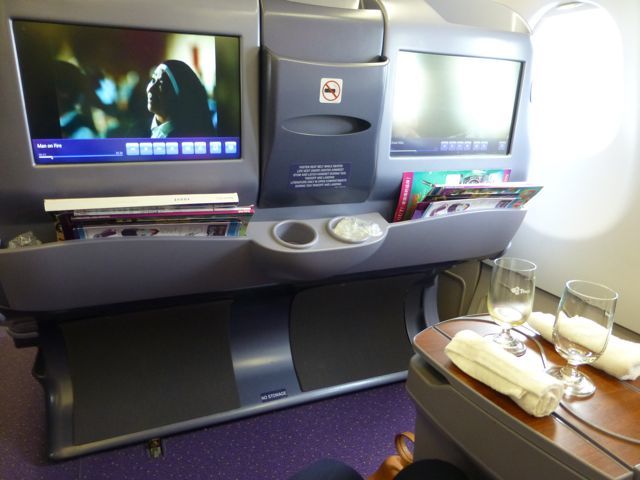
We arrived home safe and sound after about 20 hours of actual air travel including legs from: i) Bangalore to Bangkok, ii) Bangkok to Taipei, iii) Taipei to Seoul, and iv) Seoul to Vancouver.  As mentioned in our first post, this trip was Business Class via our Visa Card points.  After we made our original plans, we had to make a change and as a result, the last ten-hour leg from Seoul to Vancouver was in Economy, with a chance for an upgrade at the gate.  When we got to the gate in Seoul there was only one seat left in Business.  Deborah rode the last ten hours in a pod and I was in Economy.  I was just far enough back to see her but too low a class to walk up and visit her.  Due to her kind heart she made one visit to steerage over the ten hours to let me know she was doing fine without me.

I Got To Ride Upfront Half the Trip


I Couldn't Quite Touch the Seat in Front of Me


Hot Towels and Champagne at the Beginning of Each Leg


Deborah's Pod

The long ride home gave us time to reflect on our trip and crystallize some thoughts about the experience.  India is a great place to visit.  Having been once we would like to return and see new places (probably along the east coast) and revisit some others.  While having Jinder and Kal as our guides made the trip as great as it was, folks could enjoy an India experience without a Punjabi or Hindi speaker along.  English seems to be the second “official” language and most people we met had a working level of English.

As for our impressions of India we must be “through the front door” and say one cannot ignore the poverty, air pollution, garbage, dirt, dust and cattle.  There is no denying that India has many problems.  There are far too many people living with very little.  Air pollution, garbage and road systems are huge challenges for the country.  The country's hard infrastructure has not kept up to the population growth but new construction appears to be ongoing.  Travel can be challenging but easily done if one is prepared to be patient and flexible.

Having stated the challenges, if that is all a visitor focuses on, they will miss seeing all the things that make India a great place. 

India is rich in history.  It was at the historical crossroads of the East and the West.  Various empires seized the lands, took the resources, and left their marks in architecture, art, religion and languages dating back to the Mongolian empire and before.  The French, Dutch, Portuguese, and Brits have all been a part of India’s modern history.

The variety and quality of the food we experienced was a definite highlight.  Most meals were authentic Indian.  Our experiences ranged from a homemade farm meal in Punjab, to highway cafes, to the historic Leopold in Mumbai, to modern fusions of Indian & western tastes.  The vegetables are as tasty as they are vibrant in colour.  The mystery food never failed to provide a unique and enjoyable taste.  The spice level was usually “medium” and there was plenty of naan and yogurt to cool the palette when the spices were strong.  Going without beef for a month was easy when provided with so many alternatives.  I think it would be easy to be a vegetarian in India.  It was most interesting to walk into a McDonalds where the only burgers were chicken or fish.

Certainly for us the highlight of the trip were the people themselves.  Even those with next to nothing appeared to be enjoying their lives as best they could.  Folks everywhere could not be more friendly and willing to help a traveler.  Jinder’s relatives and friends in Punjab dropped what they were doing just to ensure the visitors from Canada were treated well. 

Yes… vendors try to get as much as they can from tourists but they are simply making a living and doing the best they can for their families.  At the end of most hard bartering session there were usually smiles all around. 

India has the “service industry” down pat.  Again, folks cannot do enough for you and if there was one person assigned to do a task at home, there were two waiting to help in India.  While servers were certainly appreciative of a “tip” that is not why they worked so hard.  Servers genuinely want to meet your needs and I suspect were more than appreciative to simply have a job.  

Speaking of “people” we would be remiss if we did not comment on one of the most significant “highlights” of the trip.  Travelling with Jinder, Kal, Stan and Doreen was a highlight in itself.  You could not find four easier going, positive, willing, and kind travel companions.  The folks you travel with make or break an experience and ours was in everyway a success.

Until next time… what is that Linda … The Italian cycling group is planning a six-day cycling trek through the old Kettle Valley rail trails in August?  Count us in.